

Abstract: To balance printing speed and precision, Buse Unlu's team proposed a new 3D printing strategy that combines single-photon absorption with two-photon polymerization. By pre-sensitizing the photoresist with blue light and then using a femtosecond laser for focused curing, the approach not only reduces the required laser power by about 28.6% and halves the exposure time, but also significantly improves axial resolution (by 63%). Theoretical analysis indicates that this pre-sensitization mechanism mainly stems from blue-light-induced oxygen depletion and background latent polymerization, offering a new idea for efficient micro/nanostructure fabrication.
Research background
In recent years, with the rapid development of micro/nano manufacturing, micro-optics, and MEMS devices, the demand for high-resolution, high-efficiency 3D printing has grown steadily. However, although the mainstream one-photon polymerization methods (such as SLA) print relatively quickly, their inherent linear absorption makes submicron spatial resolution difficult to achieve, with obvious crosstalk in the axial direction, which struggles to meet the requirements of complex microstructure printing. Two-photon polymerization (2PP), with its nonlinear absorption mechanism, can achieve nanoscale precision and excellent three-dimensional spatial selectivity, making it an important tool for high-precision printing; however, it is less efficient, slower, and highly dependent on femtosecond laser power, with high energy consumption. Therefore, how to improve printing speed while ensuring high resolution has become a key technical challenge in this field.
To address this challenge, researchers have proposed various acceleration schemes, such as two-photon grayscale lithography (2GL), spatiotemporal focusing, multifocus printing, and single-exposure volumetric printing using spatial light modulator (SLM) beam shaping. Although these methods improve printing efficiency to some extent, they still have limitations: for example, multifocus methods are limited by the field of view of high-numerical-aperture objectives, closely spaced foci easily cause interference and distortion, and laser power must be increased with the number of foci, raising both system complexity and energy consumption.
In addition, recent studies have attempted to combine the advantages of one-photon and two-photon polymerization. Brunner's team proposed a strategy that sequentially combines one-photon polymerization (1PP) and two-photon polymerization (2PP): in waveguide fabrication, 2PP is first used to print the core microstructure, and 1PP is then used for flood curing of the surrounding area, reducing the overall printing time by about 90%. Akash et al. used two synchronized pulsed fiber lasers to apply 1PP and 2PP simultaneously to the printing region, reducing the femtosecond laser power requirement but increasing the printing spot size by about 1.25 times, sacrificing some resolution. Clearly, achieving the best balance among energy efficiency, precision, and speed remains a frontier direction of ongoing exploration in this field.
Core work of the paper
This study proposes a new 3D printing method that integrates one-photon and two-photon absorption, greatly improving printing efficiency while maintaining nanoscale resolution. By pre-sensitizing the photoresist with 405 nm blue light before femtosecond laser focusing, the initiation threshold and required power for two-photon polymerization (2PP) are significantly reduced. Experiments show that blue-light assistance not only accelerates the onset of polymerization but also gives the printed structures a smaller axial voxel size and better surface quality.
Based on this principle, the authors built a custom two-photon 3D printer that uses a blue-light sheet for regional pre-sensitization combined with scanning of a normally incident infrared femtosecond laser focus, enabling rapid printing of complex 3D structures (such as suspended bridges). Compared with conventional 2PP, the printing speed is more than doubled and the femtosecond laser power is reduced by nearly 30%.
The authors also established a theoretical model to explain the mechanism of blue-light pre-sensitization. They found that oxygen depletion inside the high-viscosity photoresist and latent polymerization are the key factors driving the sensitization effect. The model agrees closely with the experimental results, validating the effectiveness and theoretical basis of the pre-sensitization strategy.
Device structure and innovative design
This study proposes a new 3D printing method that integrates one-photon and two-photon absorption, greatly improving printing efficiency while maintaining nanoscale resolution. By pre-sensitizing the photoresist with 405 nm blue light before femtosecond laser focusing, the initiation threshold and required power for two-photon polymerization (2PP) are significantly reduced. Experiments show that blue-light assistance not only accelerates the onset of polymerization but also gives the printed structures a smaller axial voxel size and better surface quality.
1. Dose test for blue-light-assisted two-photon polymerization:
To study the effect of blue-light pre-sensitization on two-photon polymerization, the researchers built an experimental platform based on a femtosecond laser and blue-light pre-sensitization. The system uses a 780 nm mode-locked femtosecond laser as the main polymerization light source, with a spatial light modulator (SLM) for lateral scanning and a high-numerical-aperture microscope objective focusing into the resin. A 405 nm continuous-wave blue laser diode is introduced as the pre-sensitization source, providing single-photon excitation of the resin through collimated illumination. The focus and the blue-light pre-sensitization region strictly overlap to ensure precise control of the energy superposition. In the experiments, an acrylate resin system containing the photoinitiator TPO-L was used, and voxel formation was tested in two modes: femtosecond laser only and combined with blue-light pre-sensitization. The results show that after blue-light pre-irradiation, the polymerization threshold power required from the femtosecond laser dropped from 10 mW to 7 mW, voxel growth was markedly faster, and a lateral resolution of about 150 nm was still obtained at lower power. This design verifies the significant role of single-photon pre-sensitization in reducing energy consumption and improving polymerization efficiency.
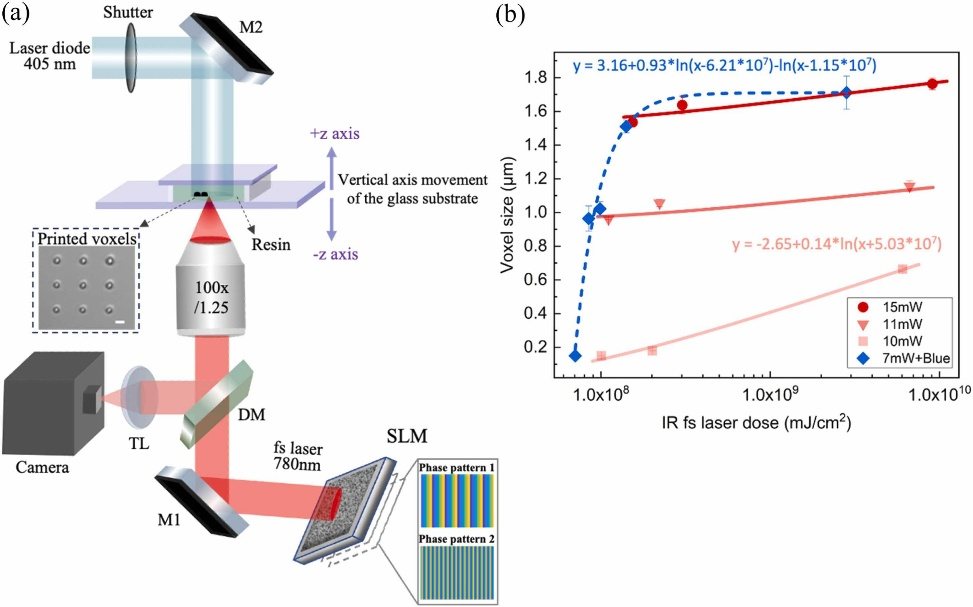
Figure 1 Dose test for blue-light-assisted two-photon polymerization
(a) Schematic of the experimental setup.
(b) Dose tests using femtosecond laser powers of only 15, 11, and 10 mW, compared with a 7 mW infrared femtosecond laser power assisted by 48 mJ/cm2 blue-light illumination. The data points were fitted with logarithmic functions (the sum of two logarithms for blue-light-assisted 2PP and a single logarithm for 2PP only). Error bars represent one standard deviation over multiple measurements (n≥3).
2. Printing 3D structures by blue-light sheet-assisted two-photon polymerization:
The team built a custom two-photon 3D printer that combines a blue-light sheet with a femtosecond laser to achieve efficient photopolymerization under spatially crossed illumination. In the system, 405 nm blue light is shaped by a cylindrical lens into a light sheet of controllable thickness for single-photon pre-sensitization of the resin, while a 780 nm femtosecond laser is focused within the light sheet to achieve two-photon polymerization. The blue light and femtosecond beam intersect orthogonally in the resin, initiating polymerization only in the crossing region and thus enabling high-resolution printing. This design supports a larger field of view and a longer working distance, effectively increasing print size and speed. Experiments show that under identical laser parameters, blue-light pre-sensitization significantly reduces the energy requirement of the femtosecond laser (about 28.6% lower power and half the exposure time) and achieves a smaller axial voxel size (an improvement of up to 63%), successfully printing complex 3D microstructures including suspended structures.
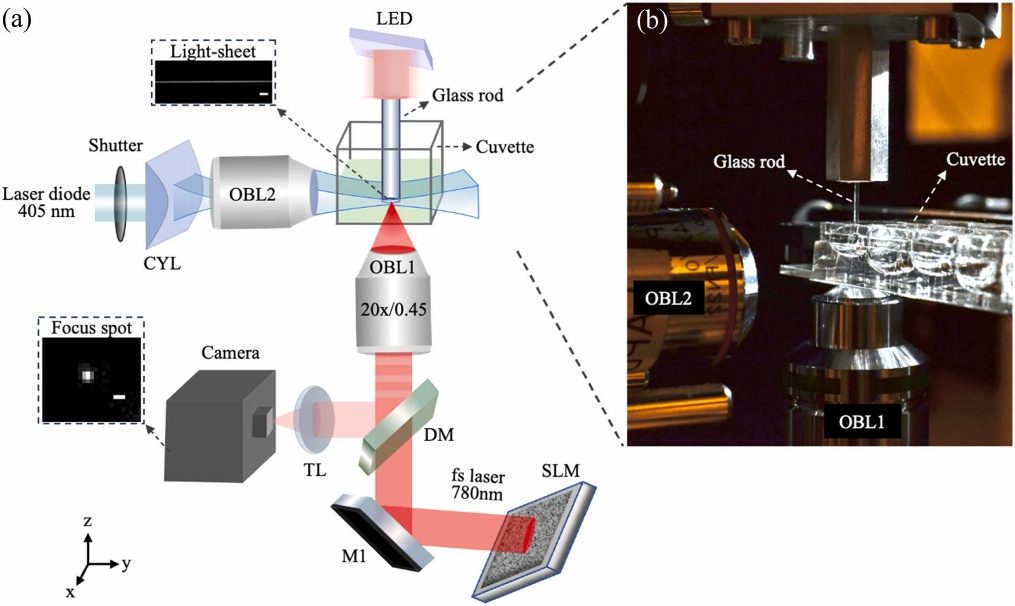
Figure 2 Printing 3D structures by blue-light sheet-assisted two-photon polymerization
(a) Schematic of the experimental setup. The insets show the cross-sectional image of the light sheet in the xz plane and the femtosecond laser focus reflected from a glass rod immersed in the resin. Scale bars are 50 μm and 2 μm, respectively.
(b) Real photograph of the printing region taken with this setup, in which the femtosecond laser focus (OBL1) coincides with the blue-light sheet (OBL2) at the tip of a glass rod immersed in the resin container.
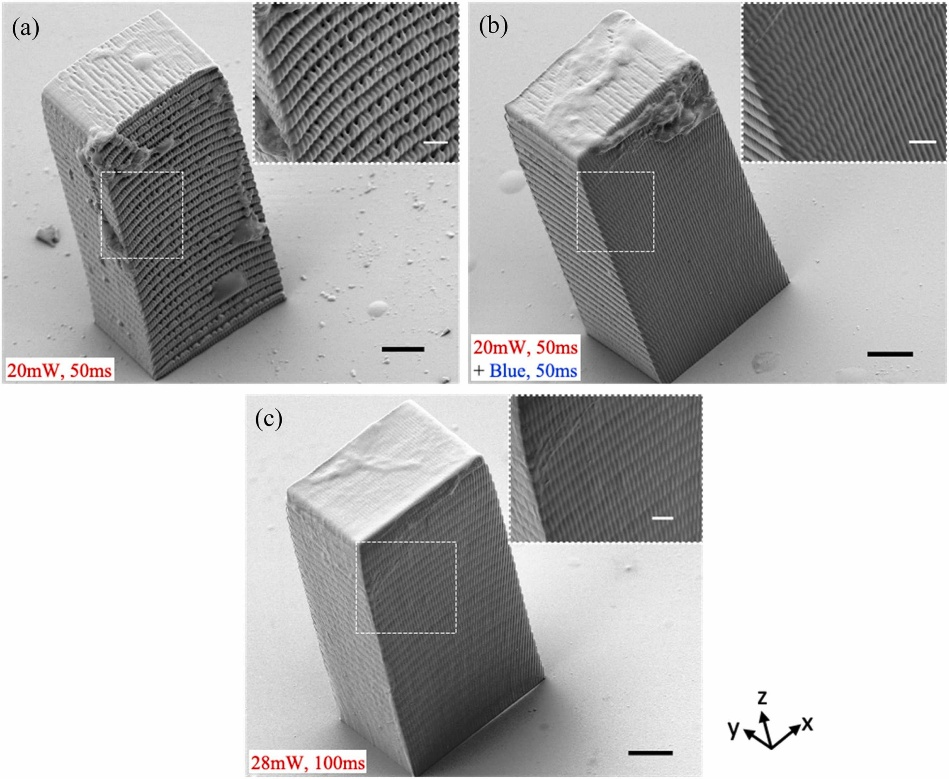
Figure 3 SEM images of the printed tall 3D rectangular structures.
(a) Image printed with only 20 mW femtosecond laser power and 50 ms exposure time per infrared femtosecond laser spot;
(b) Image printed after blue-light sheet pre-sensitization;
(c) Image printed with only 28 mW femtosecond laser power and 100 ms exposure time per infrared femtosecond laser spot, without blue-light sheet sensitization. The insets show the magnified regions indicated by the dashed rectangles. The inset scale bars are 10 μm and 3 μm.
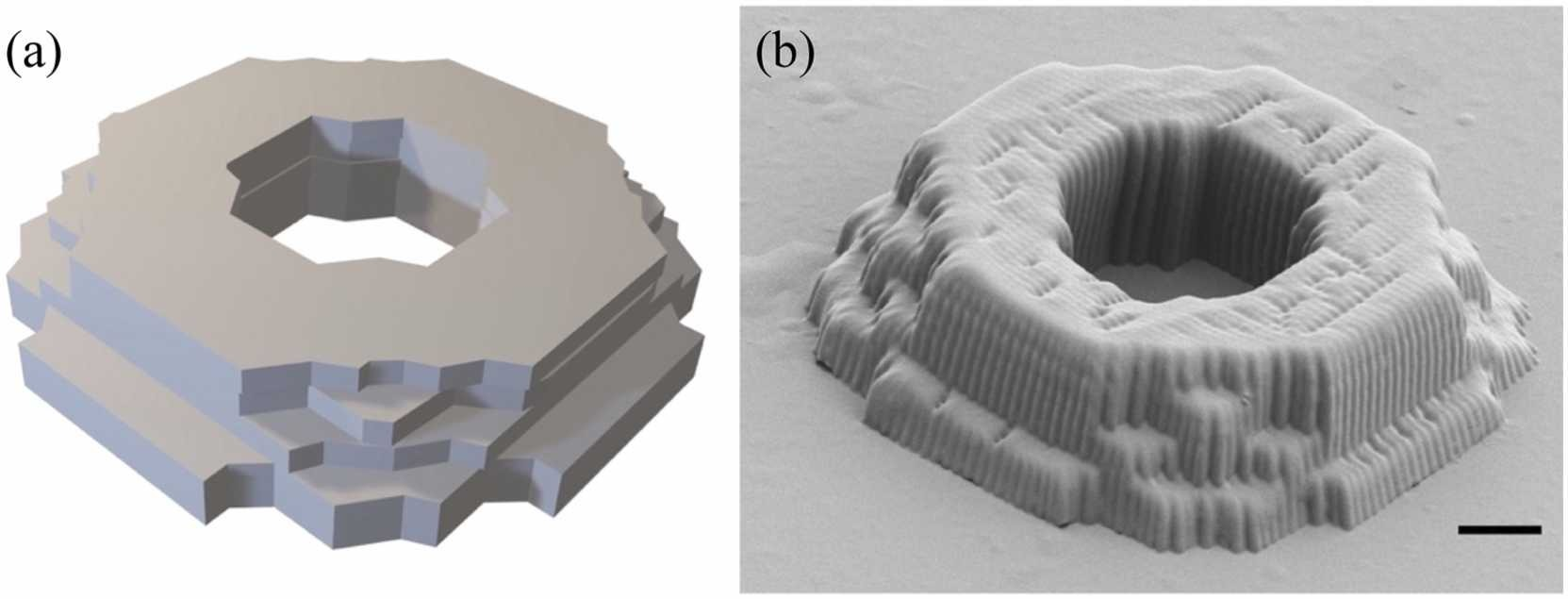
Figure 4 Printing complex structures by blue-light sheet-assisted 2PP
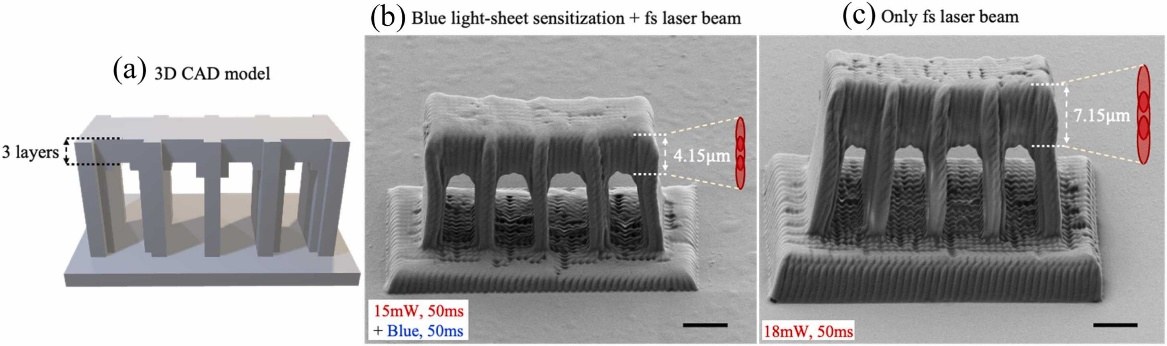
Figure 5 Printed bridge structure
(a) 3D CAD model.
(b) SEM image of the bridge printed by blue-light sheet-assisted 2PP.
(c) SEM image of the bridge printed by 2PP only.
3. Theoretical model:
To explain the mechanism by which blue-light pre-sensitization improves polymerization efficiency, the authors constructed a theoretical model based on the assumption that "diffusion in high-viscosity resin is negligible," proposing that the polymerization process can be divided into three stages: first, blue light depletes oxygen in the resin through single-photon absorption; then, background latent polymerization is initiated at low dose; finally, in an oxygen-free environment, the femtosecond laser triggers two-photon polymerization. The model analytically describes the photon absorption rates for single-photon and two-photon absorption and derives the total conversion for voxel formation. The calculated results agree closely with experimental measurements, confirming that pre-sensitization relies mainly on the superposition of oxygen depletion and background conversion, which is the key to low-threshold, high-resolution printing.
Conclusions
This study systematically investigated the combined process of single-photon sensitization and two-photon polymerization (2PP). The results show that, compared with 2PP alone, the technique can significantly shorten manufacturing time while maintaining processing precision. Experimental data show that the process combining 405 nm blue-light pre-irradiation with femtosecond laser scanning can still achieve a lateral processing resolution of 150 nm while reducing femtosecond laser power (50%) and exposure time (80%), improving processing efficiency by about 10 times.
The team developed a blue-light sheet illumination system integrated with a digital micromirror device (DMD), combined with a custom two-photon printing platform. Test results show that the blue-light sensitization effect can reduce the optical energy required for two-photon absorption (2PA) processing by a factor of 2.8 (for identical cube structures). Further study found that the axial processing resolution of the technique can exceed half the light sheet thickness. The approach shows significant advantages in threshold voxel activation manufacturing (TVAM): by keeping the material system in a pre-sensitized state close to the curing threshold and then applying precise energy control through two-photon absorption, rapid prototyping of high-resolution 3D structures can be achieved. Theoretical calculations indicate that the processing speed can be an order of magnitude higher than that of conventional 2PP.
Source: Unlu, Buse, et al. "Single-photon-assisted Two-photon Polymerization", Additive Manufacturing 94 (2024): 104455.
Article URL:https://www.sciencedirect.com/science/article/pii/S2214860424005013?via%3Dihub
DOI:https://doi.org/10.1016/j.addma.2024.104455